


[[{“value”:”
Thank you for reading this post, don't forget to follow and signup for notifications!

Savage surprised many with the launch of the Stance 9mm. Compact, ambidextrous, and under $500, it brings real extras to a crowded concealed carry market.
When Savage announced the 9mm Stance in 2021, many loyal Savage fans were genuinely surprised. Savage Arms isn’t a company that many of us associate with handguns. The brand is most often associated with Axis—entry level rifles that are known for their accuracy. And the Model 110, with its floating bolt head, sets a high standard for production performance. If you hunt, you are aware of Savage. But Stance—a micro compact 9mm?
Savage’s History with Handguns
Sometime in the middle of the 20th century, Savage shifted focus from the handgun market and really focused its efforts on shotguns and rifles. Even the shotguns fell away after the Stevens brand became part of the portfolio.
Now, in the first part of the 21st century, Savage is going all out. They’re back to making shotguns under the Savage name (Renegauge) and now make 1911s and lever action rimfires. They’ve increased the number of rifles they’re making, too. Savage has wildly upped the game for high-end production guns with carbon fiber barrels from Proof Research helping them define lightweight hunting options and the brand is winning matches with heavyweight long-range precision rifles.
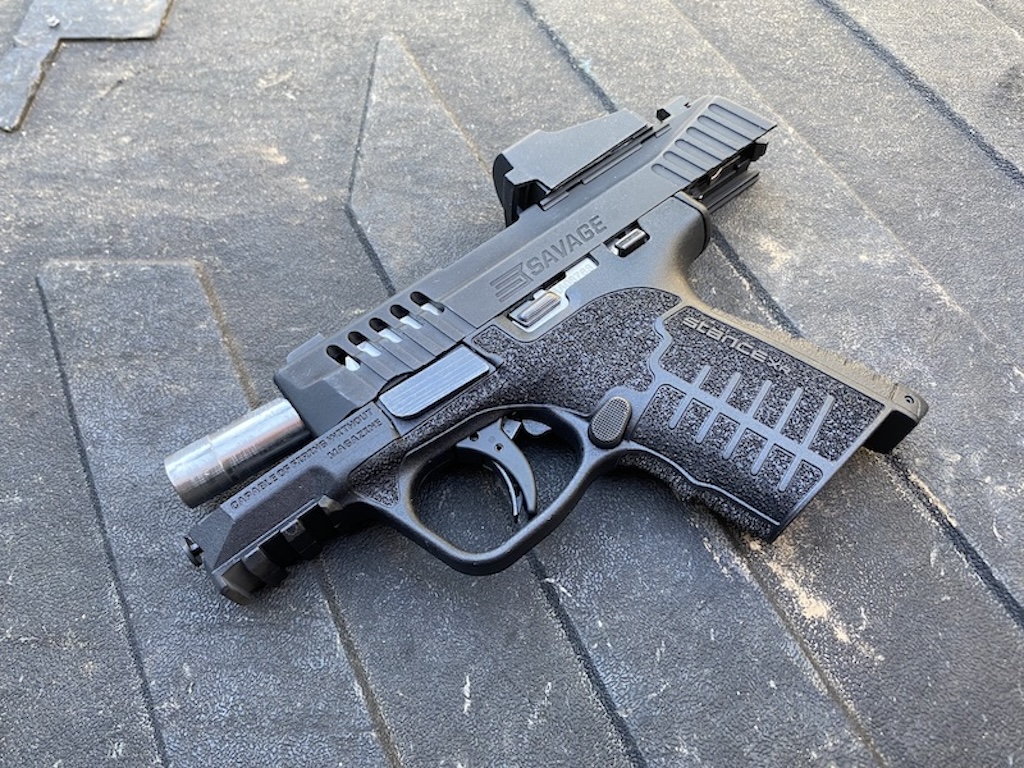
Savage Stance XR
The original Savage Stance is a slim single-stack 9mm with 7–8 round mags, simple aluminum trigger, and no optic-ready option. The newer Stance XR upgrades to double-stack 10+1/13+1 mags, optics-ready slides with a quick-release plate, an improved trigger with safety blade, refined grip and slide cuts, accessory rail, and more variants (manual safety, night sights, red-dot packages). It’s slightly bulkier and pricier, but offers modern capacity and features.
Is capacity everything?
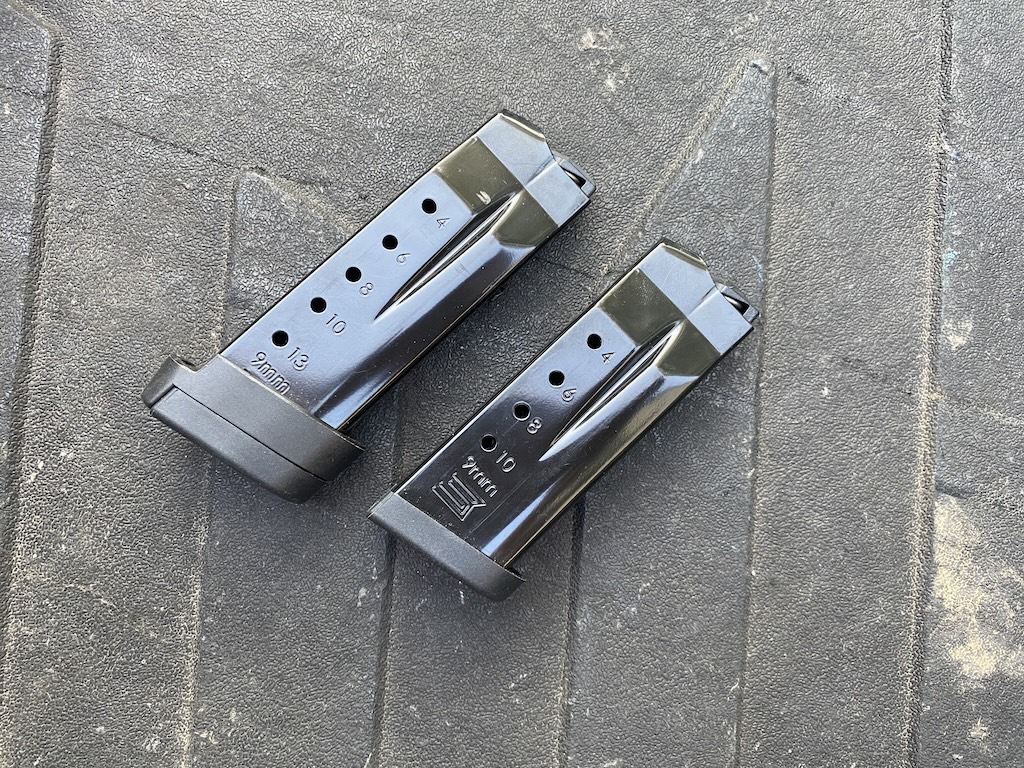
That shift isn’t merely about numbers—it’s cultural. Thirty years ago, the archetypal concealed carry setup was a five-shot snubnose revolver dropped into a jacket pocket. Today, serious practitioners routinely build carry systems around appendix rigs, mag caddies, and the mindset that having 40 rounds on-body is both achievable and reasonable. The leap from “make do with a J-frame” to “carry a sub-Glock that eclipses a service pistol” shows how consumer demand, holster tech, and ballistic design have converged to make capacity inflation not only possible but mainstream.
Getting a grip on Stance XR
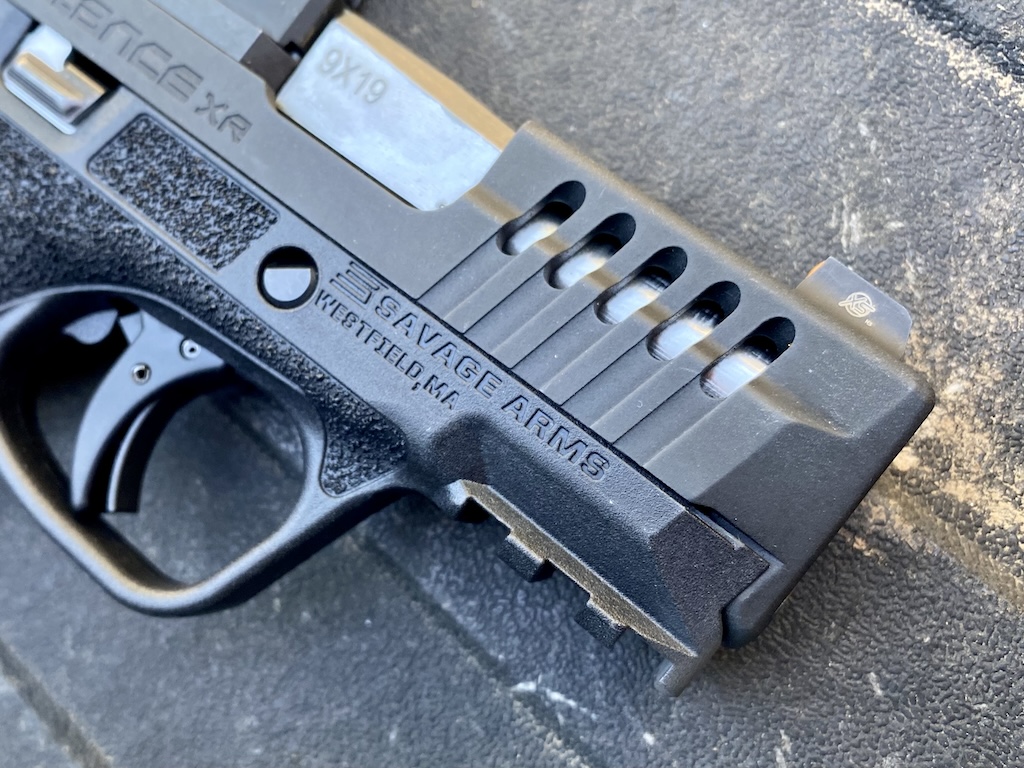
That aggressive texture on the grip is mirrored in the slide itself. Control surfaces on Stance are very tactile. The milled edges are sharp enough to provide a place to grip without being so aggressive that they bite. Short guns like this are often times fairly stiff because of the tight slide return springs. When you move to rack the slide, the piercings and clean milled depressions help provide grip for manipulation.
With moisture in the mix, the Stance’s slide does lose some of its bite, though the frame texture holds firm and maintains reliable purchase. Against something like a stock Glock, the contrast is immediate—Savage’s frame feels intentionally abrasive, while Glock’s polymer still favors smoother contours. The end result is a pistol that remains controllable even under compromised conditions. Gloved use is equally practical, though shooters running heavier winter or duty gloves will want to verify clearance inside the trigger guard; the geometry leaves room, but a bulky glove can crowd the arc and alter trigger feel.
Lining up the sights
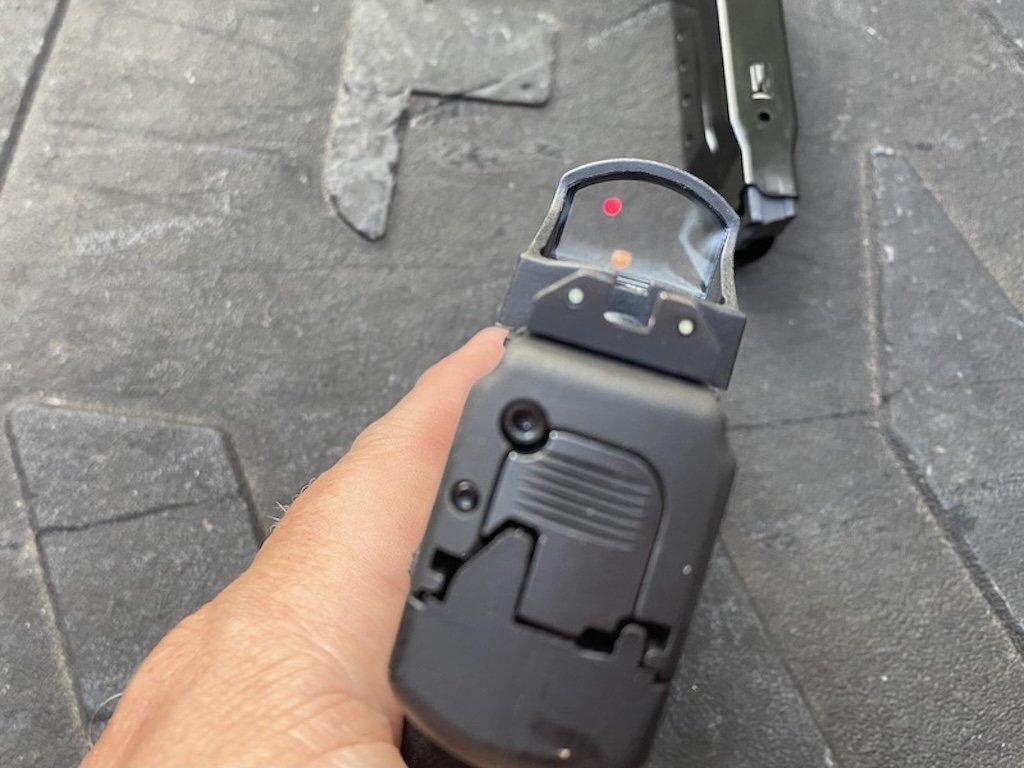
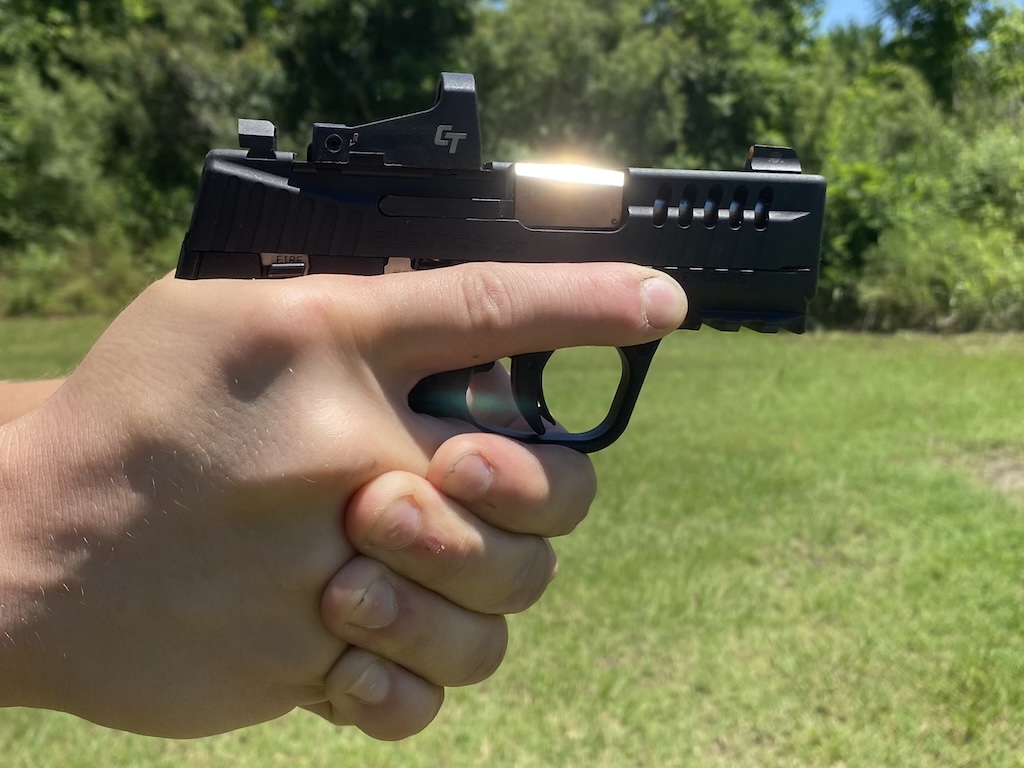
Savage has also partnered with Crimson Trace to add a red dot version from the factory—which Savage calls the XP.
The standard sights are solid enough for almost any shooting scenario you’d encounter with a defensive handgun. The dot on the XS front sight is easier to see. It is wide. The red dot helps extend the practical range. With either of the iron sight options, Stance’s sight radius is limited, so keep your expectations for accuracy at any distance reasonable.
Beneath the red dot is Savages QRO- Quick release optics plate system. This fits the Shield RMSc pattern, but there are other plates available.
Savage Stance Specs
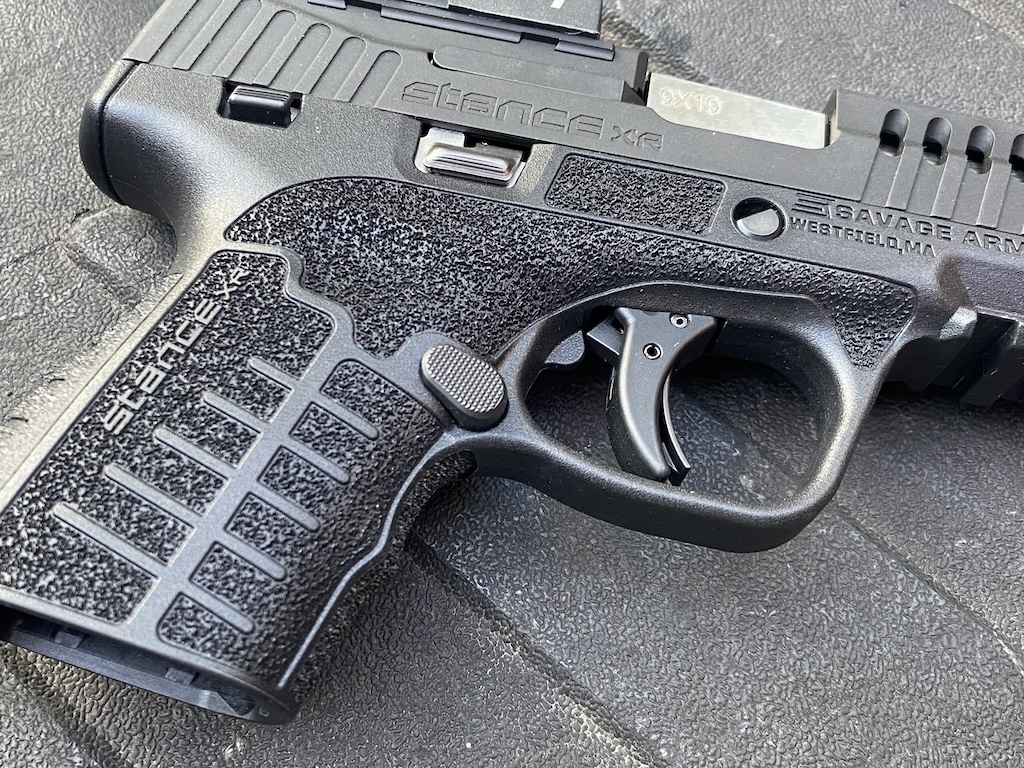
The slide ports help reduce some of the weight. I don’t have an accurate number to define how much weight is spared, but the idea is that this reduction in mass speeds up the movement of the slide. They don’t function as ports for recoil-reduction, but they do provide openings for pocket lint and debris to work inside the frame—so keep it clean.
The Stance ships with fully ambidextrous controls, a design choice that benefits not only left-handed shooters but also those who deliberately cross-train with their support hand. The slide stop is mirrored with functional paddles on both sides, and the magazine release is engineered with a bilateral balance rather than a simple reversible button. That level of symmetry is less common than many assume—most pistols marketed as ambidextrous only give you a halfway solution.
With the mag release in particular, it’s worth testing how your own grip interacts with it. In theory, a high and aggressive firing hand could ride the catch and trigger an unintentional drop. In practice, I wasn’t able to induce a malfunction, even when deliberately trying to torque my grip into it. Still, it’s the kind of control layout that demands a dedicated block of training time to confirm it meshes with your shooting style rather than assuming it will.
There are two things here with Stance that I think are must haves that too many other makers completely ignore. The first is the rail. This isn’t a janky mini-rail. And it isn’t a proprietary pattern that light makers have to accommodate. It is an actual Picatinny rail large enough for the addition of a TLR-7 size light. This is such a win, as too many small 9mms either skip it or go with some odd proprietary set up that just misses the mark.
The second bonus is the safety bar in the trigger. Savage is known for the performance of their triggers. The AccuTrigger is a user adjustable rifle trigger that defines crisp performance in factory guns. While Stance is a far cry from an AccuTrigger (for obvious reasons), it has a short take-up, a predictable break, and has a built-in trigger-shoe release. These should be standard on all concealed carry guns, but they’re not.
For those who want an actual external safety, that variant is also available.
Shooting the Stance
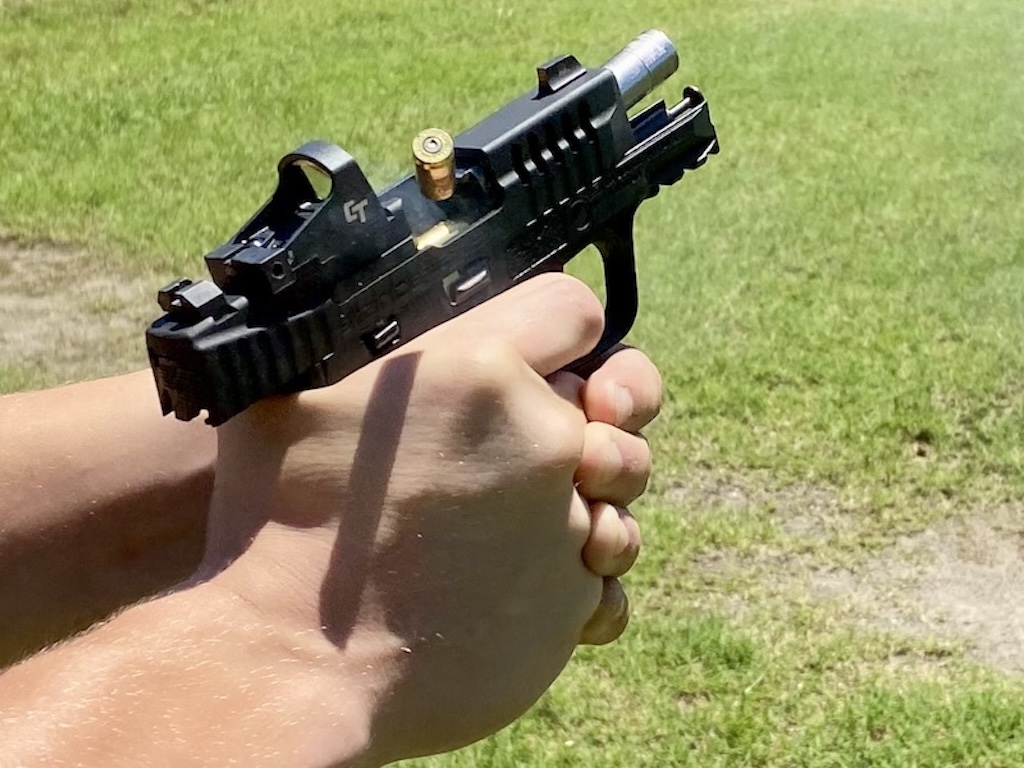
A sharp recoil on a concealed carry pistol is what you trade for when you choose something that is easy to conceal. Why are we even talking about this still? I’ve had so many conversations with people who think concealed carry guns should shoot like a Staccato XL. It won’t happen. Savage built the Stance to ride effortlessly in the holster and perform when it matters most.
When shooting Stance, I find any attempt at fast follow-up shots comes with a wide spread. For me, I’m hitting close to eight inches apart. My first shot goes where I want, but the steep muzzle flip means my second and third shots walk up.
Knowing this, you should practice controlled, precise first-shot placement. I’d follow this up with drills that stress effective follow-up shots (three-shot strings), all from practical defensive shooting distances (under 5 yards—preferably under 5 feet). Then move to engaging multiple targets. Build proficiency in shooting while you move, with staged reloads, and with emphasis on shot placement. Then back up and do it again. Watch how distance changes shot placement.
I’ve run many long range days where I run 500+ rounds through a G19 or a 1911. I can shoot both almost flat with solid split times. I can shoot both with little to no hand fatigue. But Stance is not as easy to hold down and I find myself looking at shooting the small gun the same way I look at exercise—it isn’t exactly fun. Proficiency, though, is crucial for armed self-defense, and that is the end goal of every day carry and why Stance exists.
What’s the best ammo for the Savage Stance?
I’ve long been a fan of Hornady’s Critical Defense 9mm.
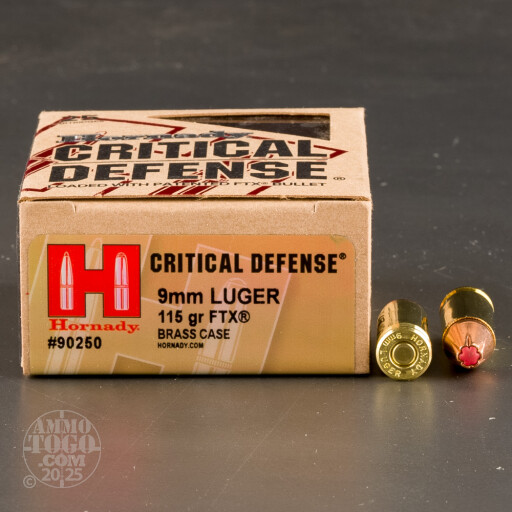


For longer 9mms, especially in winter, I favor the hotter-running Critical Duty +P loads.
From shorter barrels, 115 grain 9mm tends to drop some of its velocity. 3” test barrels often show results ranging from 1,250 +/- down to just over 1,000 FPS. That’s still better than what you’d see from a .380 of comparable size.
http://www.ballisticsbytheinch.com/9luger.html
The barrel on Stance is 3.2”. Any noticeable increase in muzzle velocity is going to be within a margin of error.
So what’s my stance on the Savage Stance?
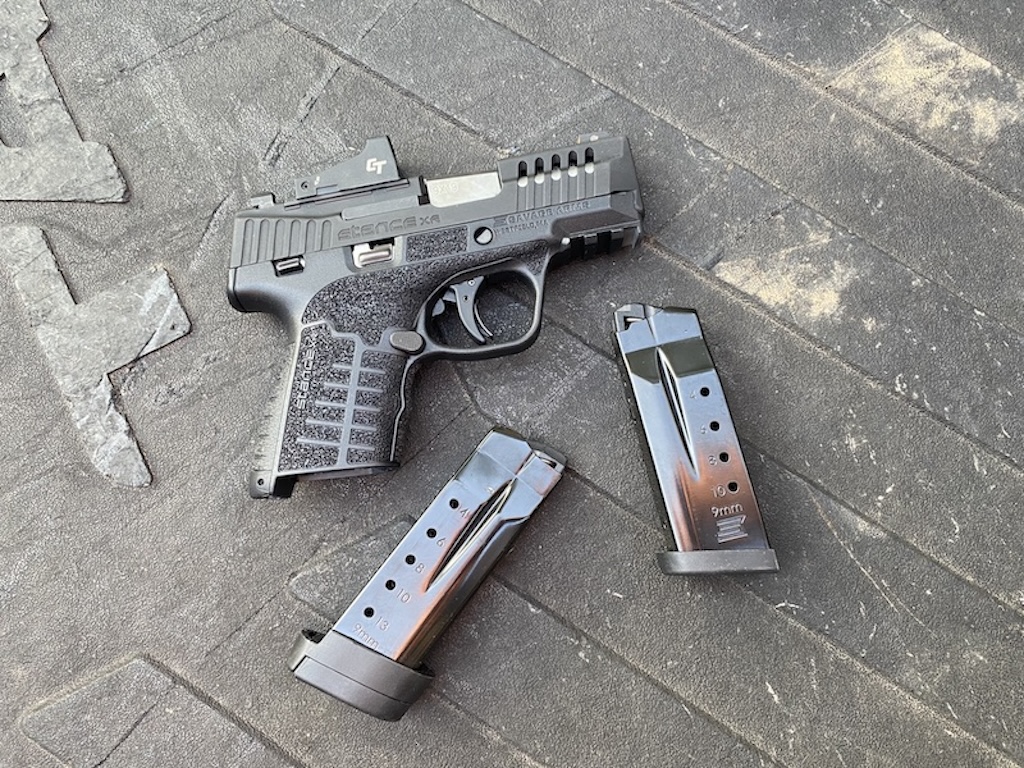
People underrate this little Savage despite how easy it is to carry and shoot. The flush-fit mag holds 10 rounds. This is a solid option for those with small frames. By comparison, it trumps the GLOCK 43 in terms of round capacity (7 vs 10).
Stance prices vary based on the extras like lights or lasers. The MSRP on a base model is still under $500. If you can find one in a store, they sell for less. Even in a crowded field, Stance stays competitive because of the extras it offers.
“}]]

