

By Matthew Fagiana
Thank you for reading this post, don't forget to follow and signup for notifications!
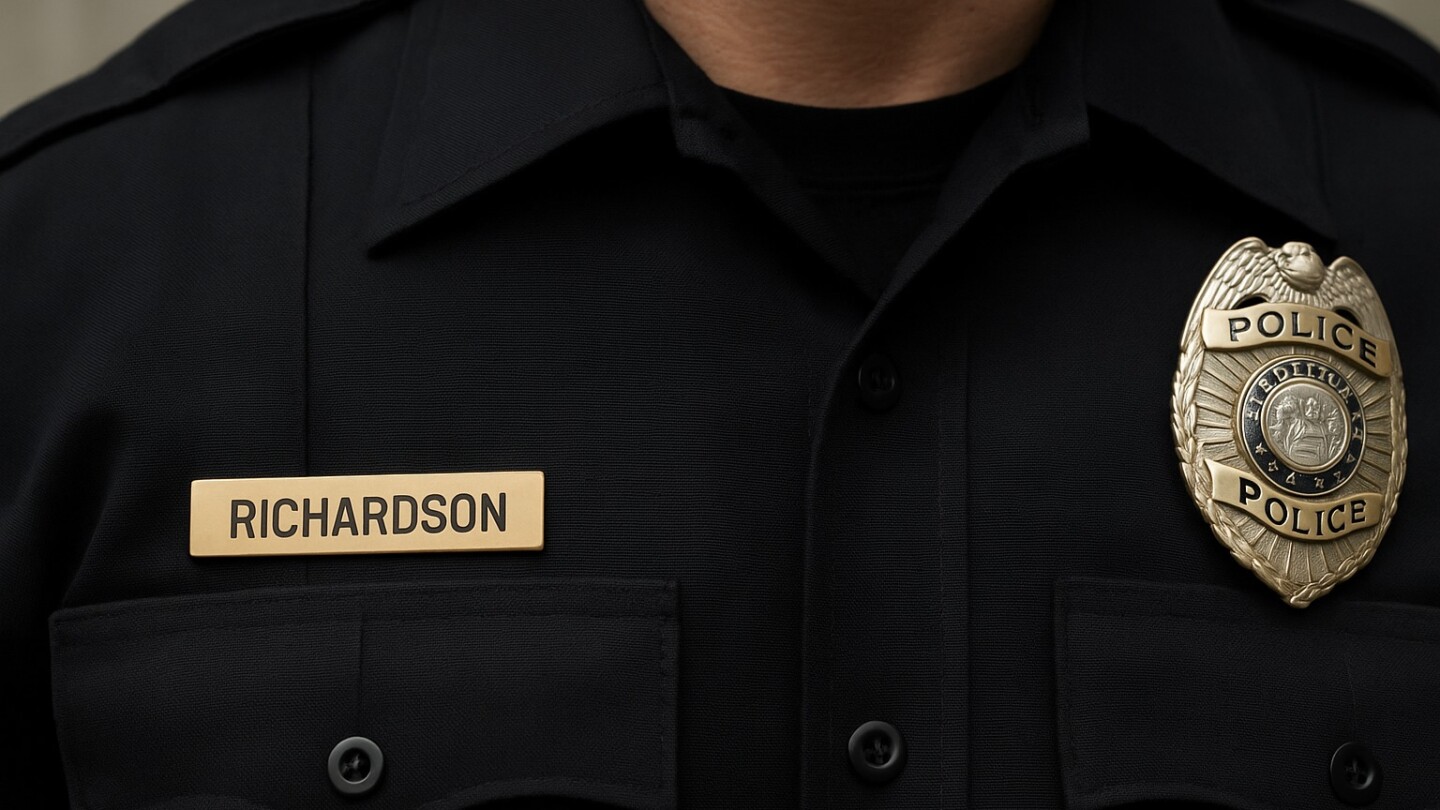
It’s a long-standing tradition: From the East Coast to the West Coast, the Deep South to the far North — every American law enforcement uniform proudly displays the officer’s last name. For decades, the nameplate has been more than just a formality. It might show a “Serving Since” year, a unit designation like “Crash Reconstruction” or “FTO,” but the most identifying piece of information is always the last name.
When this tradition began, the concept of “doxing” wasn’t even a thought — because the word didn’t exist. Fifty years ago, if someone saw a cop’s last name on a uniform and wanted to know more, they had to physically go to the police department to dig deeper.
That’s no longer the case.
Today, we live in a digital world where a last name is often all it takes to uncover an officer’s personal life: their home address, spouse’s name, children’s names and more — all searchable in minutes through online tax records, property databases and public info brokers. What used to be a gesture of transparency is now a potential threat vector.
Let me be clear: I believe in accountability. I believe officers should have a visible identifier on their uniforms. But I think it’s time we seriously examine whether last names are still the right choice.
Take the Calgary Police Service in Canada. They recently launched a 12-month pilot program removing last names from uniforms and replacing them with badge numbers — each a unique identifier easily visible on the chest where names traditionally appear. The public can still identify officers, file a complaint, or give praise. But they can’t weaponize a last name to dig into an officer’s private life.
Calgary even gives officers the discretion to share their names voluntarily if they feel safe doing so, but mandates that badge numbers must always be visible and provided when requested.
This isn’t about hiding. It’s about adapting.
Policing in 2025 is different than it was in 1975. The way we engage with our communities, the expectations placed on us and the dangers we face have all evolved. It’s time our uniforms reflect that evolution, too.
We know that policing has evolved significantly — both in terms of operational performance and the expectations placed on today’s officers. Maybe it’s time the nameplate evolves as well. A visible badge number still ensures accountability, still provides a unique identifier and still reinforces professionalism. But it also respects the reality of modern threats.
If you work for a boss who says “no” because it’s change, I’m sorry. It’s time we stop doing things just because we’ve always done them that way. It’s time we start protecting our officers in the same modern way we expect them to protect the public. It’s time we take steps to mitigate the doxing that so many officers now face.
We have an obligation to protect our communities. And we also have a great responsibility to look out for those we ask to do it.
About the author
Matthew Fagiana is a retired law enforcement leader with more than 25 years of experience in policing, public information and crisis response. He served as a Patrol Commander and Public Information Officer for the Loudon County Sheriff’s Office, following earlier roles with the Gatlinburg Police Department and Tennessee Highway Patrol.
Today, Matthew is a national and international instructor for FBI-LEEDA, delivering executive-level training on media relations, brand management and crisis communications. He is also the CEO and cofounder of Guardian Communications, a consulting agency that helps police executives lead with clarity and confidence in high-stakes environments.
Matthew has trained law enforcement professionals across the U.S. and Canada, combining real-world patrol experience with a passion for helping agencies build trust through better communication.

