

By Arif Alikhan, J.D.,
Thank you for reading this post, don't forget to follow and signup for notifications!
Police work is full of facts. Officers are trained to recognize them quickly: a person running, a hand reaching, a gun in a waistband. Seeing facts clearly is essential.
But consider two officers facing the same situation. Both see a man with a gun. One immediately focuses on the weapon. The other asks a different question: Does this person pose a threat right now? The difference between those two thought processes may determine whether the encounter ends in force, communication, containment or no enforcement action at all.
One of the most common decision-making failures in policing does not come from missing facts. It comes from mistaking a fact for the issue.
Issue recognition is the ability to identify the real question that must be answered before deciding how to act. That question is the governing question — the one that drives everything that follows. Identifying it is the skill. Answering it is the work. It is a critical thinking skill that becomes most important under pressure, when time is limited and stress is high.
Facts are not the issue
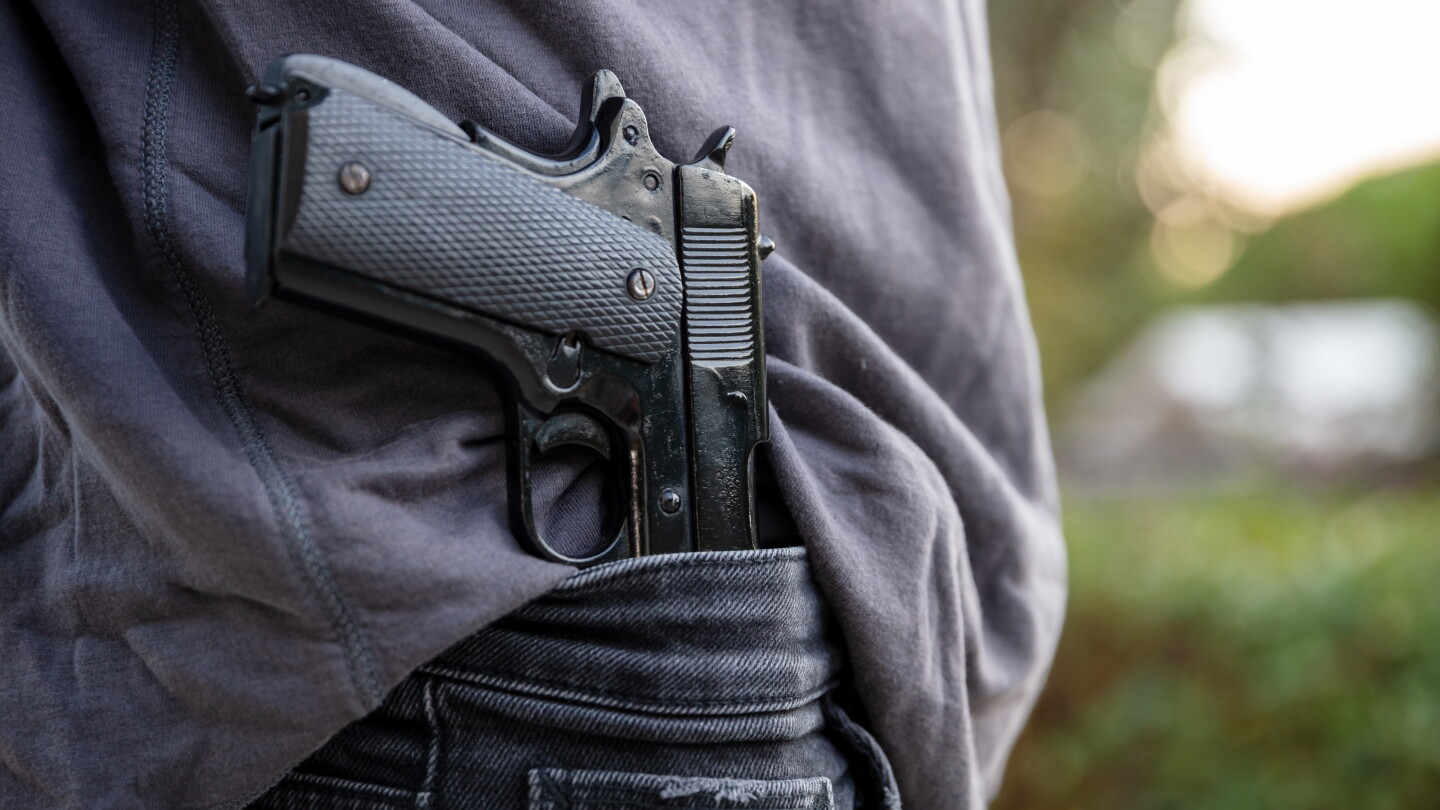
Consider a familiar scenario: a man with a gun.
If you ask, “What’s the issue here?” many people will respond, “The guy has a gun.” That answer feels obvious, and the fact is undeniably important. But it is still just an observation. By itself, it does not tell an officer what decision needs to be made.
Facts describe what is present. Issues define what must be decided.
In policing, the issue raised by a person with a gun is not the gun itself. The issue is whether that person poses an imminent threat. That question drives everything that follows. It determines whether the appropriate response is immediate force, containment, communication, distance or coordination.
When officers skip that step and treat the fact as the issue, decision-making narrows quickly. Options disappear. Escalation becomes more likely, even when it is not required.
The governing question
An issue can be understood as an important question that must be resolved to act. In the armed-person scenario, the governing question is straightforward: Is this person a threat right now?
Answering that question depends on assessing ability, opportunity and apparent intent. Those concepts are familiar to officers, even if they are not always named explicitly. Ability refers to whether the person has the means to cause harm. Opportunity considers distance, position and access. Apparent intent is inferred from observable behavior, not guessed motives.
At its simplest, the process looks like this:
- Observe the facts.
- Identify the issue.
- Answer the governing question.
- Choose the response.
Experienced officers often move through these steps in seconds. The value of issue recognition is not that it adds complexity to decision-making. It ensures that action is tied to the right problem.

Importantly, the presence of a gun may answer the question immediately in some situations. When distance collapses, time disappears or behavior signals an imminent attack, the governing question may already be resolved. In those moments, issue recognition does not slow action. It narrows the decision to what must be done to stop the threat.
In other situations, however, the same fact does not resolve the issue. A holstered weapon, a slung rifle or a firearm carried lawfully in public may still require officer attention, but not necessarily immediate force. Treating every armed encounter as if the issue is already decided can create unnecessary risk for officers and the public.
It’s not hesitation, it’s judgment.
A common concern is that emphasizing thinking will cause hesitation. In reality, hesitation usually comes from uncertainty. Issue recognition reduces uncertainty by clarifying the decision that must be made.
This approach does not require officers to run legal checklists in their heads or wait for perfect information. It simply names what experienced officers already do instinctively when they are at their best. They read behavior. They notice movement, positioning, tone and context. They understand when time allows options and when it does not.
Issue recognition is not about delaying action. It is about acting on the right question, rather than reacting to the most emotionally charged fact.
Chasing or capturing?
Issue recognition is not a use-of-force concept. It is a decision-making concept, and it applies wherever officers face facts that pull toward an obvious response.
Consider a foot pursuit. The observed fact is that a suspect is running. If that fact becomes the issue, the default response is to chase. But flight is not the issue; catching the person is. The governing question is: What is a safe and lawful way to apprehend the suspect?
Answering that question requires officers to consider risk, terrain, available resources and time. In some situations, a solo pursuit may increase danger without increasing the likelihood of capture. In others, containment, coordination or slowing the situation down may better serve the purpose.
When officers focus only on the act of chasing, they lose sight of what they are actually trying to accomplish. Issue recognition does not just clarify the decision, it keeps the decision tethered to its purpose. The goal is not the chase. It is the outcome the chase is supposed to produce.
The habit begins before the moment of decision. Officers who practice naming the governing question during training and debriefs are better positioned to access that discipline when conditions are difficult. The goal is not a checklist but a reflex: the ability to ask, even briefly, whether you have identified the issue or just the most prominent fact.
Investigations require the same discipline
Issue recognition is equally important in investigations.
Consider a witness who changes their story during an interview. The visible fact is the inconsistency. If that fact becomes the issue, investigators may immediately conclude the witness is lying.
But the governing question is different: Why is the witness providing conflicting information?
The answer could be deception. It could also be fear, confusion, trauma, misunderstanding or an attempt to protect someone else. Each possibility suggests a different investigative approach.
The inconsistency matters. But treating it as the issue can narrow thinking too quickly. Identifying the governing question helps investigators focus on understanding the cause of the inconsistency before deciding what it means.
Leadership decisions
The same pattern appears in leadership decisions, where the stakes are broader but the thinking error is identical. Leaders often respond quickly to visible conditions, but the quality of those decisions depends on whether they have correctly identified the issue before acting.
Consider a department experiencing a noticeable increase in violent crime over several months. Community concern rises, political pressure builds, and the instinctive answer to “what’s the issue?” is straightforward: crime is up. That framing leads quickly to action, more officers deployed, overtime increased, enforcement operations launched. Those responses may be necessary, but they are based on treating the fact as the issue.
The real issue is more precise: What is driving the increase in violence, and what combination of actions will most effectively reduce it? When the issue is correctly identified, the approach broadens. Leaders examine patterns, locations, offenders, victims and contributing conditions. They consider whether the problem is concentrated, cyclical or tied to specific drivers. The difference is not whether action is taken. It is whether the action is aligned with the problem. Without that alignment, departments can expend significant effort without changing outcomes.
This is the same decision-making discipline applied at a different level. The facts may be larger and the consequences more far-reaching, but the principle is identical: leaders must identify the right issue before deciding how to act.
Recognition takes repetition
Knowing that facts and issues are different is important but applying that distinction requires practice.
When stress is high, attention naturally narrows. The most visible fact in front of you becomes the gravitational center of the decision, and the instinct to treat that fact as the issue is not a failure of judgment. It is a predictable response to a difficult situation. Officers and leaders are trained to act, and organizations generally value decisiveness. Those expectations are reasonable, and they can work against the habit this article is describing.
Building issue recognition as a reliable skill requires practice before it is needed. It develops through training, through debriefs and through the way supervisors talk through decisions with their teams. Experience alone does not guarantee it. Officers can spend years doing good work and still default to the most prominent fact in a situation if the distinction between facts and issues has never been named or reinforced.
The organizational dimension matters as well. Departments that move quickly from observation to response, without pausing to ask whether the response fits the problem, can entrench reactive decision-making at every level. Individual skill is essential, but it is harder to sustain without an environment that makes room for it.
Misidentifying the issue has consequences
Misidentifying the issue is one of the fastest ways to escalate situations unnecessarily or implement a solution to the wrong problem. It can also make decisions harder to explain later, because the reasoning was never clear in the first place.
Issue recognition helps officers and leaders act decisively without acting reflexively. It preserves options, reduces unnecessary escalation and keeps discretion intact. Perhaps most importantly, it produces decisions that can be clearly explained, because the reasoning was sound from the start.
In an environment where officers and leaders are increasingly expected to explain and defend their decisions, sound reasoning is not just good practice. It is a professional necessity.
See clearly, decide well
Good policing does not require knowing everything before acting. It requires knowing what question you are answering when you act.
Facts tell you what you are seeing. Issues tell you what decision you need to make.
The departments that get this right don’t just train officers to observe more effectively. They build cultures where asking “What’s the issue?” becomes part of everyday decision-making, from patrol encounters to command-level strategy.
Every decision begins with a question. The officers and leaders who consistently make sound decisions are often not the ones who see more facts. They are the ones who identify the right question before acting.
That question, asked consistently, changes how decisions get made.
About the author
Arif Alikhan, J.D. is the Founder and Principal of Alikhan Insights LLC, a consulting practice focused on public safety leadership and decision-making. He previously served as Director of Constitutional Policing and Policy at the Los Angeles Police Department, where he worked at the intersection of law, policy and operational practice. He is also a reserve police officer. Alikhan has dedicated his career to advancing thoughtful, principled approaches to police leadership and training.

