


At 9:44 a.m. on December 15, 2014, a gunman walked into the Lindt Café in Sydney, Australia, and took 18 people hostage. Sixteen hours later, when the siege ended, two hostages were dead.
Thank you for reading this post, don't forget to follow and signup for notifications!
The tactical team outside the café had the training, skills and equipment to intervene. Yet they were not permitted to act until it was too late. What failed was not the team on the ground but the decision-making apparatus above it. The incident command structure could not make decisions in the time available, and the expertise of operators who could see what was happening went largely untapped. The coroner’s inquest was harsh, criticizing command staff for failing to act decisively and for not using the knowledge and capability of the tactical team.
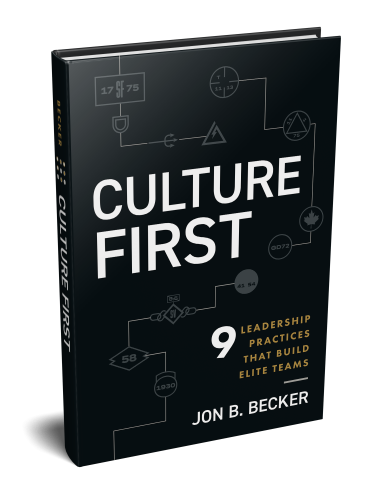
The Lindt Café siege is a cautionary tale about decision-making and the cost of failing to act in time. It is where Chapter 8 of my book, “Culture First: 9 Leadership Principles That Build Elite Teams,” begins.
| WATCH: Jon Becker on why culture – not tactics – drives performance under pressure
Culture drives performance
“Culture First” examines what makes the most effective tactical organizations perform at such high levels. The answer is culture.
Culture is the operating system beneath everything an organization does. It shapes how teams interact, how they make decisions, how they handle adversity and whether they improve over time. Chapter 8 focuses on a capability shared by elite teams across tactical, sports and corporate environments: the ability to make difficult decisions in a timely manner.
An effective decision-making machine does not happen by accident. It is built deliberately. For decision-making, it rests on four practices elite units consistently execute well.
Elite teams treat indecision as failure
Making hard decisions is difficult, and many organizations fall into paralysis or delay. Elite units do not view indecision as neutral. They see it as a decision not to decide, which is a failure.
In evolving situations, waiting on a commander who will not commit already shapes the outcome. Most leaders understand this in theory. Far fewer design their organizations to move at the speed the mission requires.
This is usually a structural problem. Decisions are made by the wrong person, at the wrong time, with the wrong information. Yet few stop to examine why. Building a decision-making machine requires fixing that architecture deliberately. It means pushing authority down and enabling decisions, even when some will be imperfect.
Elite teams seek and achieve superior orientation
Most in law enforcement are familiar with Col. John Boyd’s OODA loop: observe, orient, decide, act. The problem is that it is often misunderstood.
The popular interpretation treats OODA as a linear race. Move through the loop faster than your opponent and you win. That is a flawed reading. In Boyd’s framework, orientation is not just one step. It sits at the center and shapes everything else. It determines what you notice, what you value and what options you believe exist.
Speed without accurate orientation leads to the wrong answer faster.
High-performing organizations constantly update their understanding of reality as conditions change. They focus on accurately perceiving what is happening and using that awareness to make better decisions.
Elite teams place authority where awareness lives
The right decision-maker needs three things: training, situational awareness and time. When those do not align in the same person, decisions suffer.
Most organizations assign authority based on rank rather than awareness. That creates risk.
The most dangerous scenario is a commander who requires decisions to flow upward but lacks the expertise and awareness to make them. By the time a decision is made, it is often wrong and arrives too late.
Elite units push authority to the person with the best real-time understanding of the situation. The person closest to the problem makes the call. Leadership ensures that person has the training, trust and authority to act.
Elite teams attack their own thinking
Many organizations use planning to reinforce a preferred course of action. Teams build confidence in a plan rather than test it.
Elite units do the opposite. They challenge their thinking before operations and scrutinize it afterward.
Dr. Gary Klein’s premortem is one example. Before committing to a plan, teams assume it has failed and work backward to identify why. This exposes weak assumptions before consequences become real and creates space for concerns that might otherwise go unspoken.
Debriefs serve the same purpose after the fact. Done well, they do not just review outcomes. They reconstruct how the team was thinking at each decision point. What information was available? What did the team believe and why? Where did perception diverge from reality?
Strong decision processes are preserved even when outcomes are poor. Flawed reasoning is addressed even when results are good. Over time, this is how decision-making improves.
Culture is a behavior
These practices are not add-ons. They reflect a culture that prioritizes finding the right answer over protecting rank or preserving comfort.
That culture drives performance under pressure. The teams that make the best decisions in the worst conditions are not necessarily better resourced. They build environments where sound thinking is expected, dissent is protected and learning continues after the operation ends.
That is what ultimately improves both performance and safety and what “Culture First” is about.
About the author
Jon Becker is the founder of AARDVARK Tactical and host of “The Debrief” podcast. All versions of “Culture First” are available through Amazon here. Police1 readers receive a special 20% discount on the of the paperback version through Ingram Spark here.
“The Debrief” is a no-holds-barred conversational podcast on the leadership principles that govern the world’s elite tactical units. Featuring top military and law enforcement commanders, this podcast examines how to form and lead a highly effective team.

