

[[{“value”:”
Thank you for reading this post, don't forget to follow and signup for notifications!
A survival knife isn’t just the blade you happen to carry when things go sideways. That cliché misses the point. A survival knife is a lifeline, a tool meant to shoulder every hard job when the woods stop being friendly. Knowing the right survival knife tactics is crucial.
Survival knife tactics aren’t bushcrafting, carving spoons, or whimsical camp mascots when survival is on the line. You’ll be cutting, prying, digging, splitting, and pushing steel to its limits. A good survival knife is for hard use, not decoration.
- Specs That Matter
- Chop Smart
- Baton Power
- Long Blades and the One-Tool Debate
- Survival Knife Tactics Closing Thoughts
Advertisement — Continue Reading Below
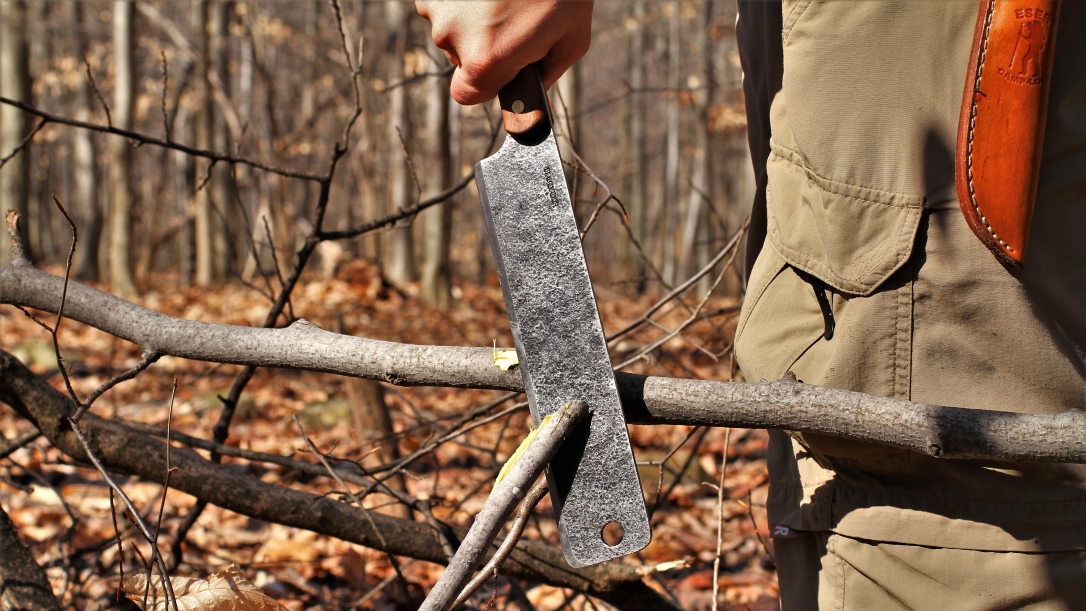
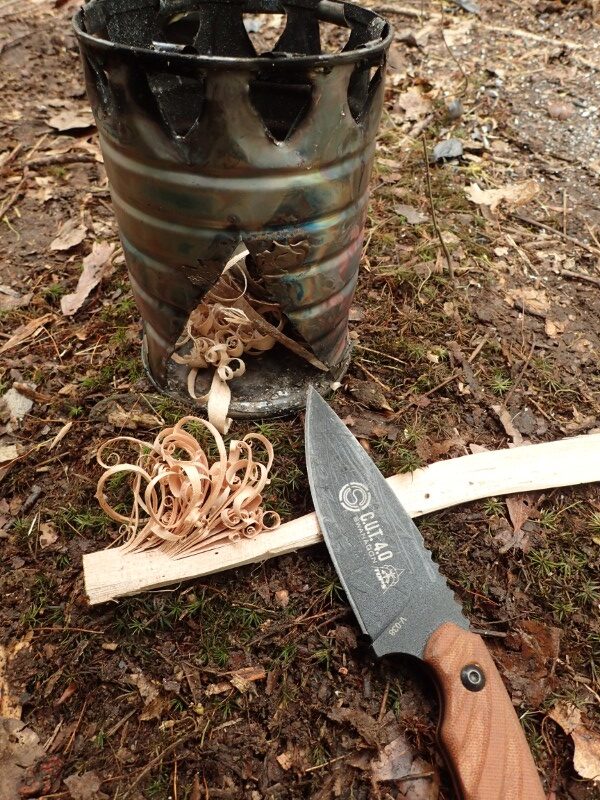
The right survival knife balances size, strength, and usability. Four to seven inches of blade length hits the sweet spot, backed by a full tang you can see between the scales. That tang is the backbone; the proof that the knife can take punishment.
The Air Force Pilot Survival Knife measures 5 inches and has been a trusted companion for decades. The Marine Corps Ka-Bar stretches to seven inches, a legend in its own right. Thin blades have their place when paired with a saw or tomahawk, but if you’re relying on one knife alone, go stout.
A survival knife must chop, baton, notch, dig, and pry without folding under pressure. Anything thinner than 1/8-inch risks failure. Better yet, go 3/16 to ¼-inch thick. Carbon steel wins here—it sharpens on river rock, sandpaper, leather, or even the sheath itself. It flexes, resists snapping, and keeps you in the fight longer than stainless.
Advertisement — Continue Reading Below
Comfort matters too. A survival knife must ride easily on your belt and feel natural in your hand, because fatigue and poor grip can be as dangerous as dull steel. Speaking of features, mastering the tactics for a survival knife gives you a distinct advantage in any backcountry scenario.
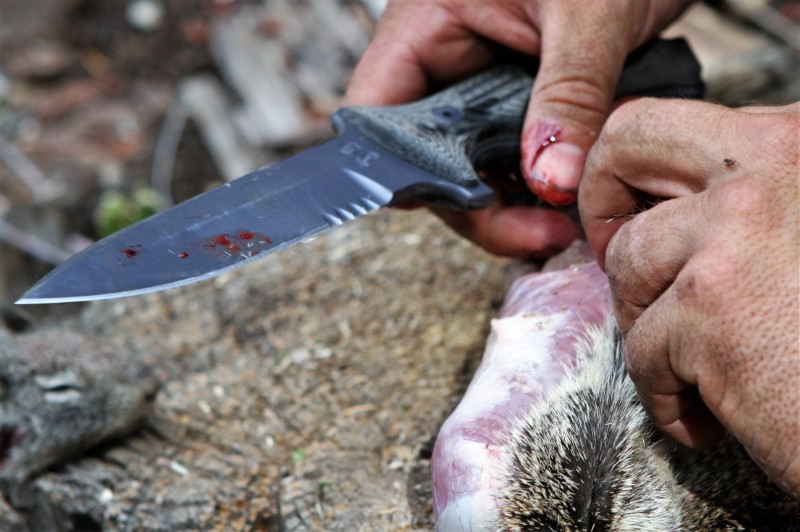
Chopping wood with a survival knife is brutal work. Anyone who’s hacked through jungle vines or bicep-thick branches knows the romance fades fast. Even with a seven-inch blade, chopping eats energy. Luckily, nature often does the prep for you. You can crack, snap, or break deadfall, downed limbs, and standing snags using leverage. Use tree crotches to snap branches, or slam wood against boulders to break it down. But when you must chop, technique saves effort.
Advertisement — Continue Reading Below
Strike at 45-degree angles from both sides to carve a V-notch. Back the wood against a solid surface, such as a stump, for efficiency. Clear branches before chopping into a standing tree, and rotate logs on the ground to keep the blade away from your body.
You don’t need clean cuts—just weaken the wood enough to break by hand or stomp. Choke back on the handle for leverage, and remember: wrist-thick wood handles most camp jobs. Anything bigger is fuel—throw it on the fire whole. For optimal results, apply chop-specific survival knife tactics whenever you face stubborn timber.
Advertisement — Continue Reading Below
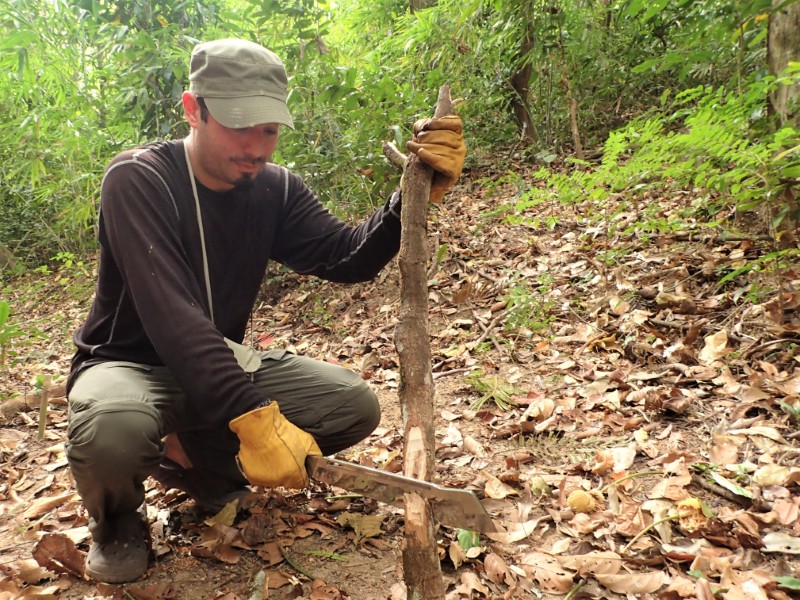
A baton turns a survival knife into a splitting machine. Any stout stick becomes a hammer, driving the knife spine into wood. Batoning at a 45-degree angle mimics the bite of a hatchet, but with more control and less risk of injury.
Place the blade on an upright piece of wood, then strike the spine hard to transfer energy. Work close to the tip only when the knife has no exposed surface above the wood. Stop short of pounding the blade into the ground—twist the knife to pop the wood apart instead.
Batoning also shines when felling small trees. Place the blade at an angle, strike with the baton, and work around the trunk until it weakens. Think of it as beaver-chewing with steel. Stay cautious when working overhead or at low levels. Awkward angles demand creativity and safety. Done right, batoning makes a survival knife punch far above its weight. Additionally, expert survival knife tactics can help you baton safely and efficiently.
Advertisement — Continue Reading Below
Some argue the ultimate survival knife is a machete. Cultures worldwide have thrived with long blades, using them for food prep, butchering, fishing, land clearing, defense, and building. The outdoors community often debates the “One Tool Option”—the idea that one blade can do it all.
Back in the forum days, Becker Knife & Tool sheaths contained Altoids tins, cordage, and every gadget imaginable. I joined that craze, too. Knives with five, seven, or nine-inch blades became survival tool systems. Ontario machetes, stretching 12 to 18 inches, were modified into one-tool monsters. We filed grinds near the handle for carving, spines squared for striking Ferro rods, and edges tuned for versatility.
The machete proves that survival knives don’t have to be short—they just have to be capable. It’s interesting how various survival knife tactics adapt to blades of different lengths and styles.
Advertisement — Continue Reading Below
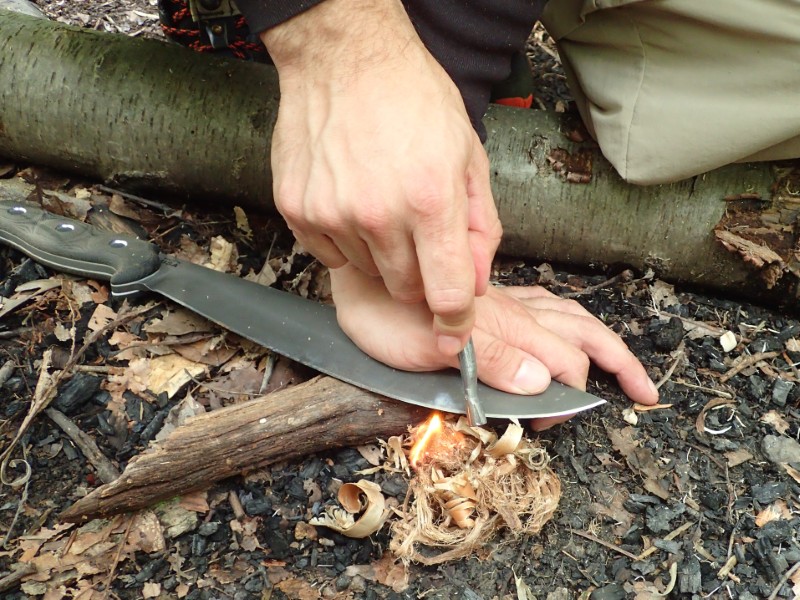
A survival knife resembles a fighter who keeps swinging despite being dragged into the twelfth round of a ten-round bout. It perseveres when everything else is exhausted. Safe practice matters: protect your hands, eyes, and body from follow-through.
As Alan Kay says, “If you will do, it will do.” Don’t let the tool dictate your limits. Learn every survival knife technique you can, with every tool you can. That’s real survival—adaptability, grit, and steel that works as hard as you do. Ultimately, being versed in effective survival knife tactics is what separates successful survival from failure.
Advertisement — Continue Reading Below
“}]]

